



 I want to donate
You are not alone - Why it's time to stop judging yourself
- authise authise
- General
- 29 Jul 2019
-
25views
Right now I have hairy legs. And armpits.
I’m not wearing any make-up, and my eyebrows are threatening to take over my face. My nails are chipped, my roots are epic, and if someone came to the door right now, I would seriously consider shouting ‘not at home!’ instead of facing them in this state.
OK, so I’m not naked (you’ll be pleased to hear), so said visitor would be unaware of the hairy legs and pits situation. But I would know, and on some deeper level, that knowledge makes me feel a little bit unfeminine.
Why?
Even as I’m writing this, I’m feeling guilty for being so shallow. Now I know that I’m more than the number of likes I get on a profile picture. I know that I’m loveable whether I’m toned, bloated, shaved, plucked, waxed or hairy. But I still inhabit a society that screams at me from every magazine cover, billboard poster and advert that female beauty equals young, slim and hair- free. I know it’s a beauty ideal that’s unrealistic and unkind, but I also know that unless my beauty is rooted in something deeper than how I’m looking on any given day, I will compare myself with poster-girl and find myself lacking.
‘Being beautiful takes a lot of hard work,’ Zara told me after I once commented on how gorgeous she always looked. ‘I have to go through all these rituals and things I do to make sure I look exactly right. I can’t just leave the house moments after getting up. Urgh. I’d look horrible. You wouldn’t recognize me.’
Of course, I’d recognize her – I know that’s not what she meant. But there’s something really sad about a beautiful young woman not wanting to be seen by people (including those who love her), unless she meets an ideal she’s adopted from an industry that neither knows nor cares about her.
It seems that being beautiful is a project that, whether we like it or not, every woman is signed up for from the moment we’re born. Living in a culture that places such a huge amount of importance on beauty increases our risk not only of not really liking ourselves, but also of envying and even disliking other women whose faces and bodies seem to fit. Social media provides countless ways to compare and judge others on their appearance alone. Anonymous, fast and image-driven, it’s the perfect vehicle for encouraging us to participate in cruelty towards ourselves and others. Somehow, if someone’s image is online, they’re fair game.
Women at war over their image is nothing new. Although the range of beauty products was pretty limited, the women of the past were nonetheless highly creative. Queen Cleopatra of Egypt (69 – 30bc) is recorded as having worn red lipstick made from finely crushed carmine beetles mixed with ants’ eggs. Women in Ancient Greece kept the bloom in their cheeks by painting on herbal pastes made from crushed berries and seeds.
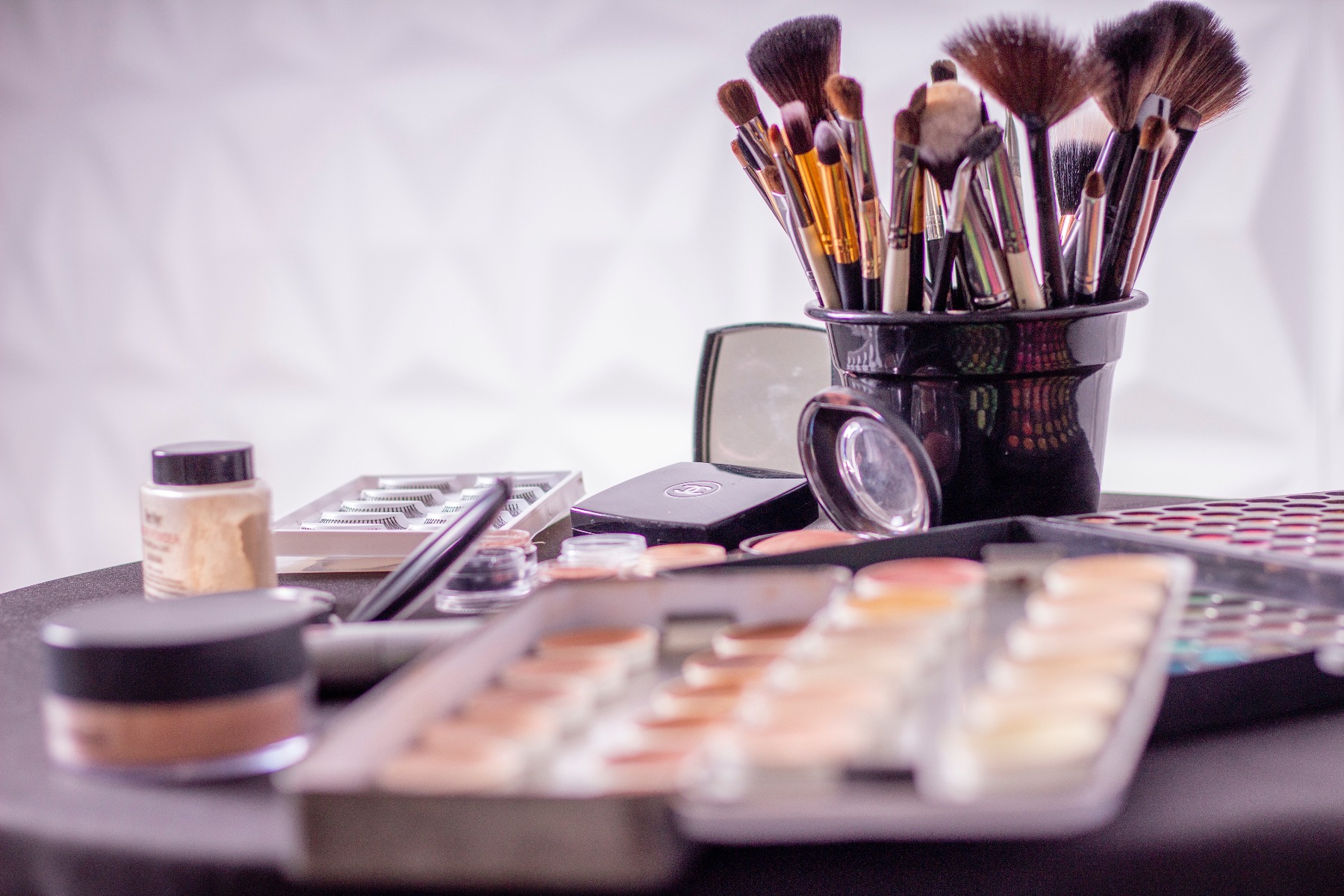
By the Middle Ages, wearing make-up was seen as a bit promiscuous, but Queen Elizabeth reclaimed the practice by popularizing the ‘natural’ look. This involved women at court plastering white lead paste called ceruse all over their faces (which made their hair fall out), and painting their cheeks and lips with red concoctions that permanently stained their skin. Nice.
Although our understanding of the chemicals involved in cosmetics is superior today, we are possibly just as easily led by society’s ideas of beauty as were our ancient sisters. A recent study of English women revealed that when it came to emotional stability, social confidence, self-esteem and physical attractiveness, the women who wore make-up regularly scored lower in these four categories than those who never wore it at all. Wearing make-up seems to make us need to wear make-up.
Making women look ‘beautiful’ has always been on the cards, but today it’s big business. From the cradle to the grave, we have to deal with the ugly truth that being who we are isn’t enough. In a world that is hugely critical about how women look, can we really blame the celebrities for giving in to a little nip and tuck to keep themselves in the public eye? Well, in a word, yes. Because the impossible standard of ascetic beauty that these women set soon becomes the benchmark that we are all expected to live up to.
Fashion magazines regularly name and shame the latest celebrity to go under the knife, but who knows whether this is actually true? And that’s the other problem, isn’t it? Not only are we suspicious of our own bodies for doing what comes ‘naturally’ (like sprouting hair, sagging and wrinkling), but we are increasingly suspicious that other women are getting a little help to keep up the illusion of perfection. It seems today that if you can get some help to be the most perfect possible version of yourself, you do so, and you’re expected to do so too.
It’s little wonder if you and I judge ourselves so harshly on what we see in the mirror.
It’s amazing just how many of us feel we fall short of the beauty ideal we have in our minds. Have you ever struggled to leave the house make-up free, or felt that a new outfit would not only boost your self-confidence but also your worth in other people’s eyes? You might even be someone who others look at and think, ‘She looks so confident; she wouldn’t ever be unhappy with how she looks.’
But you are.
And you’re not alone.
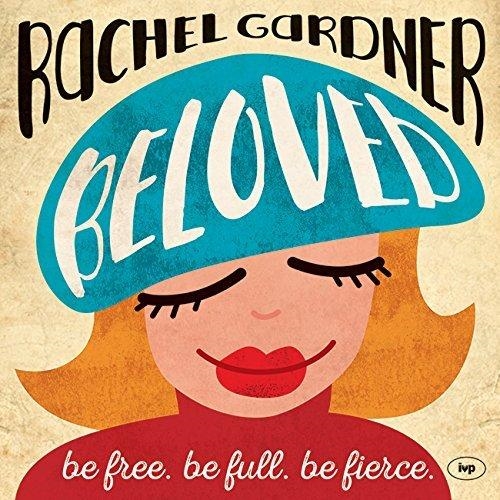
In Beloved Rachel gets to grips with lots of hot topics: beauty, identity, sexuality, relationships, disappointment, regrets, injustice, ambitions, guidance, career, family, future. She introduces you to women who’ve been through it all: some of them are doers; others are dreamers. She knows you will see yourself in them in all sorts of ways.
Related Posts


Categories
Recent Posts
1
Explore Our March New Releases
17 Mar 2025
2

Counter-rituals for the Christian creative
24 Oct 2024
5
NSBT New North American Publisher FAQ
14 Oct 2024
Support IVP with your donation
Either donate with a one-off donation or subscribe monthly.
Choose a type of donation
I want to donate
 I want to donate