

 I want to donate
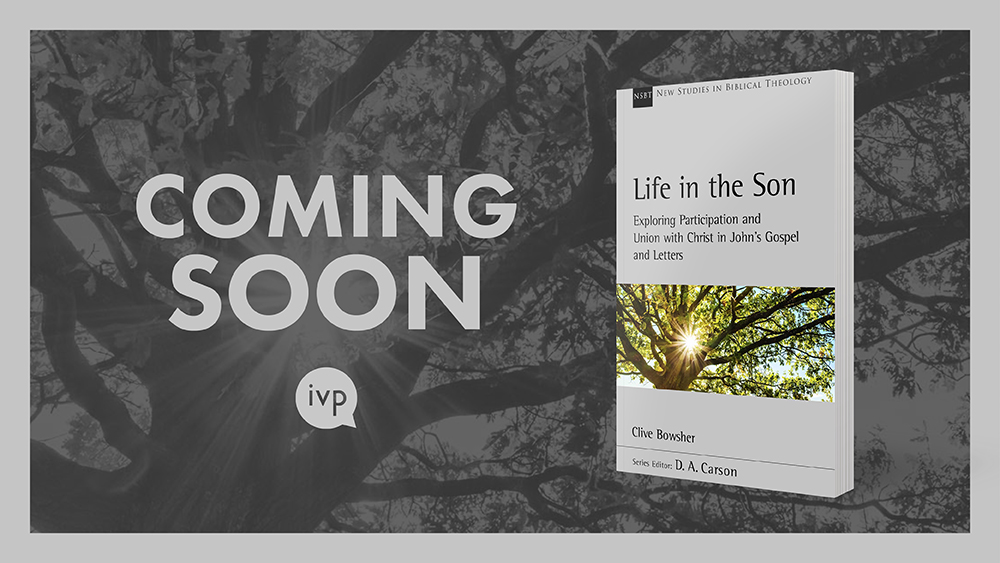
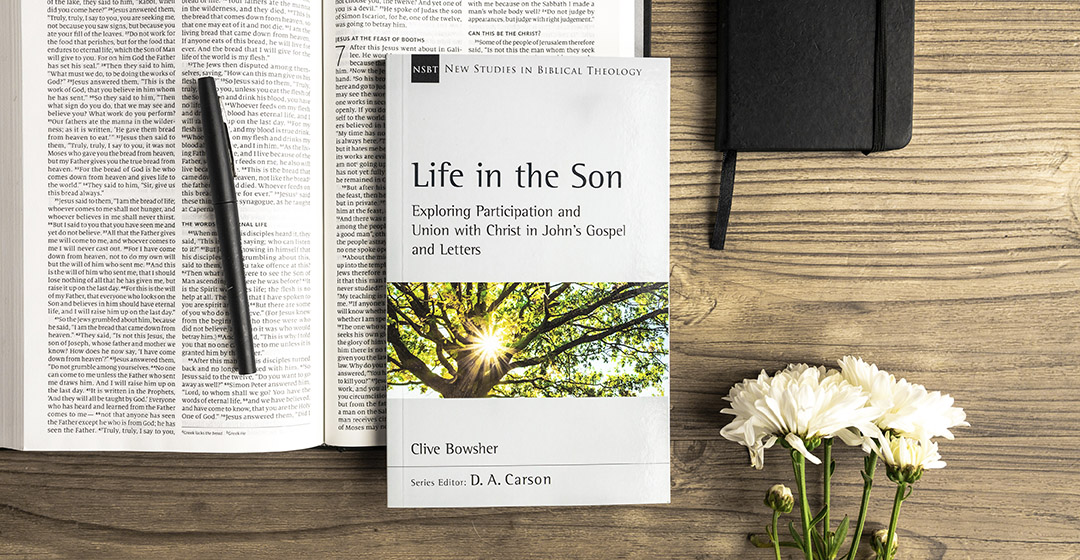
Life in the Son: Exploring Participation and Union with Christ in John’s Gospel and Letters
- Charisa Gunasekera
- New Releases
- 6 Mar 2023
-
53views
From beginning to end, Scripture traces God’s redemption story as he works to establish his fellowship and glorious presence with humanity. Throughout church history, fellowship with God has often been understood in terms of communion with God and union with Christ. Now, some five hundred years following the Protestant Reformation, the importance of union with Christ continues to stand out in the writings of Reformers such as Martin Luther and John Calvin. Nevertheless, there seems today to be a lack of emphasis on being united with Christ in proclamation and preaching of the gospel. But union with Christ has not always taken such a back seat. The Westminster Standards, for example, view the very heart of salvation coming to individuals as they are united with Christ by Spirit-worked faith.
A factor contributing to this perceived trend in preaching is that we are still left looking for a well-developed New Testament theology of union, one which is grounded on firm exegetical foundations. Even a fleeting survey of the Pauline New Testament writings reveals the frequent language ‘in’, ‘with’ and ‘through’ Christ; indeed, since the first third of the twentieth century, Pauline mysticism or ‘union with Christ’ has featured quite prominently in Pauline and New Testament studies (see Constantine Campbell, 2012). However, the concept of union with Christ in the NT remains difficult and sometimes controversial.
Across the NT, the writers often use spatial language and imagery describing believers’ relation with God, speaking both of God or Christ in us, and of us in them. Furthermore, believers are said to possess, and to participate or share in, seemingly divine properties such as life and glory. These features stand out in the Johannine Gospel and epistles. Nevertheless, Campbell notes that ‘[Union with Christ] outside Paul has hardly been addressed in New Testament scholarship.’
The Fourth Gospel describes the oneness of the Father and Son using ‘in-one-another’ language (‘the Father is in me [Jesus] and I am in the Father’, John 10:38). I show through detailed exegesis, without introducing any circularity of argument, that the Johannine ‘in-one-anotherness’ of believers and the Father-Son exhibits considerable similarity to the Johannine oneness/in-one-anotherness of the Father and Son themselves. In-one-anotherness is, I therefore argue, the right category for studying the oneness or ‘union’ of Christ and believers in the Johannine Gospel and epistles.
The principal message of the Fourth Gospel is ‘eschatological life from and in Jesus Christ the Son’. And the Gospel portrays the divine life as the closest imaginable relationship between the persons of the Father and the Son. These observations suggest that we should think of ‘eternal life’ as the in-one-another relationship of the believer with the Son, as a relational participation in the divine life and love (John 17:3). Such life and relationship with God then links the positional and the transformational aspects of soteriology, the future and the present of the believer. This volume in the NSBT series examines the claim that Johannine ‘union with Christ’ consists of an in-one-anotherness that describes intimacy with Christ, a relational participation both present and future in God’s life, work, ways and love.
Life in the Son: Exploring Participation and Union with Christ in John’s Gospel and Letters is the 61st volume in our New Studies in Biblical Theology series, edited by D. A. Carson. You can order your copy now, in print or ebook here,
Related Posts

Categories
Recent Posts
1
Explore Our March New Releases
17 Mar 2025
2

Counter-rituals for the Christian creative
24 Oct 2024
5
NSBT New North American Publisher FAQ
14 Oct 2024
Support IVP with your donation
Either donate with a one-off donation or subscribe monthly.
Choose a type of donation
I want to donate
 I want to donate