



 I want to donate
Meynell and Mental Health
- authise authise
- General
- 17 May 2019
-
27views
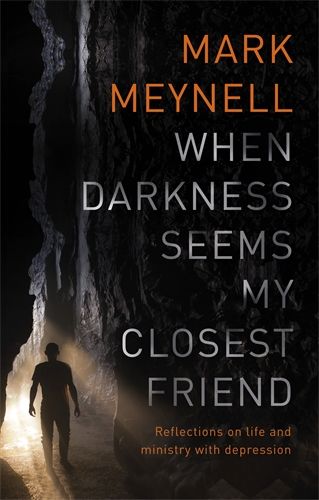
"This book is not the illusive quick fix for the depressed. Nor is it a manual for those wanting to be a Job’s comforter. You will search in vain for platitudes, programmes or psychological props. Rather, like C. S. Lewis’s A Grief Observed, it is a springboard from honest autobiography to (in this case) a realistic analysis of the tangible shadow that depression casts. With understanding and compassion, Mark Meynell undergirds the sufferer with a confidence in the Lord, who sometimes appears to work against himself in our lives. It is compelling yet practical reading, written with integrity, warmth and trust in Christ, who is the High Priest in touch with our reality. All who read this will feel deeply indebted to Mark Meynell, and to God who has taught him so much in the blizzard of suffering."
-Roger Carswell, evangelist and author
When Darkness Seems My Closest Friend (2) - Changing your pastoral phrasebook… from Mark Meynell on Vimeo.
An Excerpt from the Introduction of Mark Meynell's When Darkness Seems My Closest Friend:
Depression, and indeed the whole gamut of mental illness,is so varied that generalizations are rarely helpful. It canstrike at almost any age, individuals from all walks of life, temperaments and ethnicities. It is no respecter of the divisions that bedevil human society. Sometimes there are obvious causes or triggers; often, there are none at all, its roots perhaps lost in the remotest strata of our genetic inheritance. Sometimes the affliction disappears as mysteriously as it arrives. It can stop people completely in their tracks, perhaps becoming so acute that it leads to periods of hospitalization. For some, it is ercifully brief; for others, chronic, but somehow compatible with a semblance of normal working life. For me, it has been an ongoing, ever-present consciousness, a constant ache with occasional stabbing pains. I don’t have great highs, though occasionally I envy the thought of them (until I remember that, for friends with the likes of bipolar disorder, these can be just as hard to navigate as the lows).
So this is not a book bout a great cure, still less a wonderful deliverance. Although I do believe that will come, in the end. This is written while still on the journey. I write as a Christian believer, who strives to hold to what creedal hristianity has stood for over centuries. I write as a Christian minister, with the pastoral responsibilities and concerns that brings. Which is to say that I try never to duck the difficulties or pain – because that erves nobody’s best interests. Instead, I try to be real, showing where I have struggled and, more acutely, felt like giving up.
What follows is a series of reflections on aspects of the experience – as much for my own eed to figure things out as to help others to understand it better. As the English novelist E. M. Forster once quipped, ‘How do I know what I think until I see what I say?’ My feelings precisely! Of course, the primary risk of figuring this out in public is that in certain quarters I now become ‘the depression guy’. Yet, while I recognize hat depression is my chronic reality, akin to other different afflictions that many endure, I am clear that it does not form my identity. It is not how I define myself. It occupies nothing like the totality of my inistry nor areas of professional interest (as my speaking and writing ought to make abundantly clear). It is merely one of many elements in the mosaic of inheritance and influence that make up my life.
If what I write helps you in some small way to know what you think, or perhaps to understand what a friend thinks, then I rejoice.
Related Posts


Categories
Recent Posts
1
Explore Our March New Releases
17 Mar 2025
2

Counter-rituals for the Christian creative
24 Oct 2024
5
NSBT New North American Publisher FAQ
14 Oct 2024
Support IVP with your donation
Either donate with a one-off donation or subscribe monthly.
Choose a type of donation
I want to donate
 I want to donate